




What's below the surface: Understanding psychosocial hazards in practice
Most organisations are doing meaningful work on culture and wellbeing, but psychosocial risk lives beneath the surface, in the conditions of work itself, and most leaders don't yet have the language or framework to see it.
In this masterclass, Sam Young, clinical psychologist, co-Founder and Chief Health Officer of Humn, explores what psychosocial hazards actually are, where they sit in the system of work, and what it takes to move from activity to genuine risk control.
From good intentions to genuine control
Performance management, workplace investigations and restructures are now recognised psychosocial hazards under Australian WHS law. Organisations are increasingly recognising that culture and wellbeing initiatives, while valuable, are only part of the picture.
Boards want confidence that risk is being managed. Leaders want to act on what they're already sensing. The question is how to move from good intentions to genuine control.
- What psychosocial hazards are (and are not)
- Why engagement surveys miss risk
- The difference between wellbeing initiatives and risk controls
- How to think in systems, not symptoms
- Practical first steps
Report
The rising risk of
workplace burnout
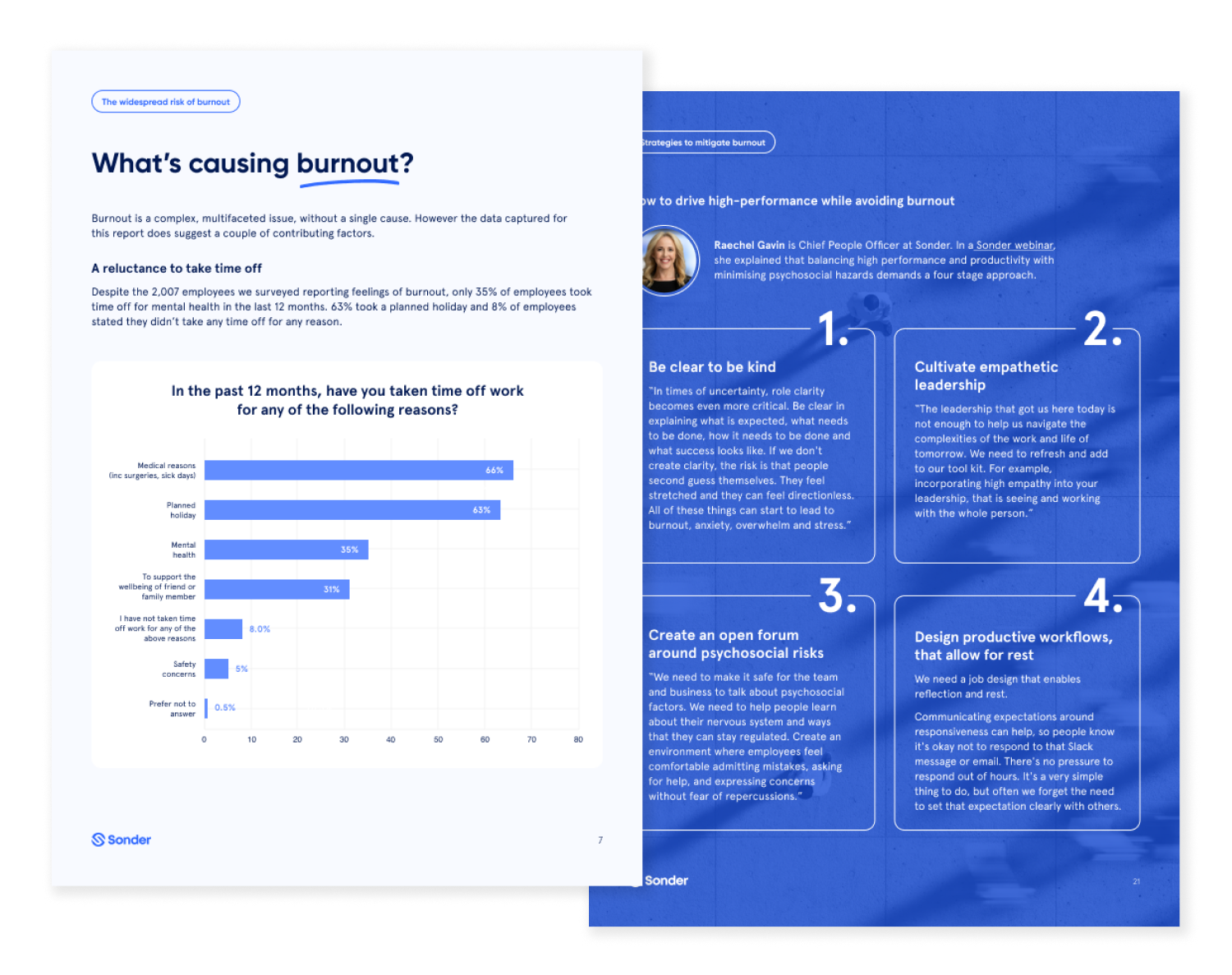
Our latest report, The rising risk of workplace burnout, shares insights from more than 2000+ employees and expert commentary on strategies to mitigate risk and support employees' wellbeing. What's inside:
The widespread risk of burnout
New statistics reveal that almost half of Australian and New Zealand employees are experiencing feelings of burnout and exhaustion
The impact of burnout on businesses
From reduced productivity and employee turnover to psychosocial risk, we analyse the potential risk for leaders and organisations
Strategies to mitigate burnout
Leaders in People and Culture and psychosocial risk share actionable, expert advice to avoid burnout in the workplace
How Sonder can help
We share the tools our customers are using to prevent burnout and stress in their organisation
What you need to know
Webinar FAQs
Yes, this masterclass is free to attend.
We encourage you to share the registration link with colleagues who may benefit from attending.
Yes. The masterclass will be recorded and shared with all registered attendees after the session, so you can watch it later if you’re unable to join live.
Once you register, you’ll receive a confirmation email with your unique Zoom link to join the webinar on the day.
The session will run for approximately 45–60 minutes, including time for audience Q&A.
Yes. There will be a live Q&A at the end of the webinar, and you’ll also be able to submit questions during the session.
This session is designed for leaders, HR, people & culture, and health and safety professionals interested in building healthier, more supportive workplaces.
